Wednesday 24 March: Nana notifies letting agency that boiler is broken and flat has no heat. Temperature in the low fifties.
Thursday 25 March: Temperatures in upper forties.
Friday 26 March: Contractor comes to visit. Says that boiler is so badly screwed up it should maybe be replaced, and the landlord will have to decide what to do. He orders the necessary repair part and says it will be in in 1-3 days. He does managed to reactivate sink and bathtub hot water, which operates separately from radiators. Nana goes to ask letting agent for decision. Letting agent says the company is authorized to repair without consulting the landlord, and therefore Nana should just wait.
Saturday March 27: Overnight low in thirties. Flat unlivable. Having obtained a key from hero History Department admin, Nana and Justin spend all day working at the University.
Sunday 28 March: Temperature rallies to 43 degrees. Friend lends Justin and Nana space heater. Nana and Justin alternate between heating bedroom and kitchen workspace. Load of laundry is attempted; humidity in kitchen means laundry won't dry.
Monday 29 March: Contractor calls to schedule boiler appointment. Overjoyed, Nana schedules it for Wednesday AM, soonest possible time.
Tuesday 30 March: Temperatures fall below freezing, with severe winds. Power lines, and thus space heater, flicker. Snow overnight.
Wednesday 31 March: Ice in toilet. Repairman arrives but is apparently not here to repair, but rather to get another estimate of cost of replacing boiler. Puzzled and cold, Justin and Nana visit letting agent, who says that the landlord decided he wanted to hear about replacing it. Justin and Nana ask why they could not have been notified of this delay. Letting agent says they are far too busy scheduling repairs to contact tenants about scheduling repairs. Justin and Nana want to ask precisely whose flat is getting repaired, as it is certainly not theirs. Instead, they ask why this estimate could not have been done one week ago, when the man came in the first time. Letting agent passes buck. Letting agent discloses that contractor is supposed to supply temporary space heaters when they can't repair the boiler immediately, and pledges to have heaters delivered today.
Justin and Nana pardonably skeptical.
31 March 2010


Newhailes & the Scottish Enligthenment
Most tourists, when they think of Scotland, probably think of kilts and whiskey, or haggis and the Highlands. Be honest, if I just said the word "Scottish," you'd probably picture something like this:

For a lot of Scottish history, though, many folks might have pictured something like this:

That, my friends, is Lord Dalrymple and son, two generations of the family that built Newhailes House, just outside Edinburgh.
You see, for much of the 18th century, Edinburgh was one of the great cultural capitals of Europe. Dubbed the "Athens of the North," Edinburgh was home to some of the most important scholars of the Enlightenment, such as Adam Smith and David Hume.

During this time, Edinburgh's cultural influence extended throughout Europe and beyond, and some of the leading lights of the day continue to influence modern politics and philosophy.
This "Scottish Enlightenment," as it would come to be called, succeeded largely through the patronage of powerful families like the Dalrymples. Such patrons not only provided political protection and financial support: in many cases, they were amateur scholars themselves, and the collections they had amassed served as important libraries for Enlightenment scholars.
The library at Newhailes House in East Lothian was one such establishment, drawing a number of scholars from nearby Edinburgh, including the aforementioned David Hume and Adam Smith. For this reason, my class on the Enlightenment took a field trip to Newhailes last week for a private guided tour.

In many ways, Newhailes is a typical Enlightenment retreat: built within a short ride of Edinburgh, the house projects both impressive wealth and a sense of isolation and rural repose. Don't be fooled, though, Newhailes is actually on the small side for homes of its type--its facade may be imposing, but the house is only one room deep.
Nevertheless, the interior doesn't disappoint. The two-storey library accounts for about one-third of the house, and definitely had me green with envy.

Alas, the books, for the most part, are gone--shipped off to the National Library to pay death duties. There's still an interesting little collection in the sitting room at Newhailes, but the shelves of the library proper are bare. Sad, but oddly evocative, and at least now the books are easily available to the public.

(GIS for "Scottish," first entry.)

That, my friends, is Lord Dalrymple and son, two generations of the family that built Newhailes House, just outside Edinburgh.
You see, for much of the 18th century, Edinburgh was one of the great cultural capitals of Europe. Dubbed the "Athens of the North," Edinburgh was home to some of the most important scholars of the Enlightenment, such as Adam Smith and David Hume.

(Notice: no kilt.)
During this time, Edinburgh's cultural influence extended throughout Europe and beyond, and some of the leading lights of the day continue to influence modern politics and philosophy.
This "Scottish Enlightenment," as it would come to be called, succeeded largely through the patronage of powerful families like the Dalrymples. Such patrons not only provided political protection and financial support: in many cases, they were amateur scholars themselves, and the collections they had amassed served as important libraries for Enlightenment scholars.
The library at Newhailes House in East Lothian was one such establishment, drawing a number of scholars from nearby Edinburgh, including the aforementioned David Hume and Adam Smith. For this reason, my class on the Enlightenment took a field trip to Newhailes last week for a private guided tour.

In many ways, Newhailes is a typical Enlightenment retreat: built within a short ride of Edinburgh, the house projects both impressive wealth and a sense of isolation and rural repose. Don't be fooled, though, Newhailes is actually on the small side for homes of its type--its facade may be imposing, but the house is only one room deep.
Nevertheless, the interior doesn't disappoint. The two-storey library accounts for about one-third of the house, and definitely had me green with envy.
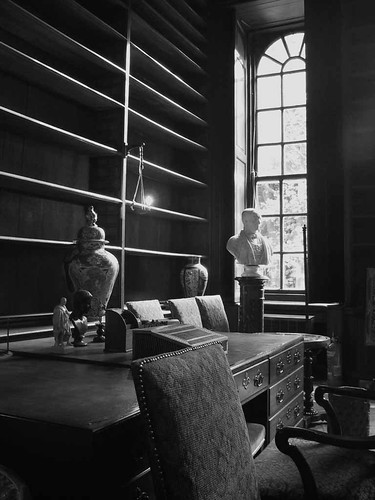
(From Flickr--no cameras allowed in the house.)
Alas, the books, for the most part, are gone--shipped off to the National Library to pay death duties. There's still an interesting little collection in the sitting room at Newhailes, but the shelves of the library proper are bare. Sad, but oddly evocative, and at least now the books are easily available to the public.
29 March 2010
Toad Patrol!
Yesterday, on my morning stroll through Holyrood Park (which took place an hour later than planned, thanks to British Summer Time), I came across the Toad Patrol.

The Toad Patrol is a weekend gathering of local children and parents who help the park rangers clear the roads before opening them in the morning.

You see, every spring, the toads around Holyrood Park leave the woods they've been hibernating in and migrate to one of the park's lochs to mate, with Dunaspsie Loch, about halfway up the hillside, being the most popular for toady trysts. So every morning, the rangers close the park roads and sweep the park, picking up any toads on the roads and dropping them in the loch.

Kids who come out to help on the weekends get a free science lesson, some exercise, and even a snack. Some might even get to touch a toad! Though I didn't see any toads out yesterday, and I don't blame them--it was very windy and pretty cold.
In any case, the Toad Patrol served as a great reminder of what a unique natural resource Holyrood Park is. The toads are only one of the unusual species inhabiting the park: so cool to have a biology lab, a geology exhibit, and a natural playground all in one, right in the middle of the city!


(Not shown: torches, pitchforks.)
The Toad Patrol is a weekend gathering of local children and parents who help the park rangers clear the roads before opening them in the morning.

You see, every spring, the toads around Holyrood Park leave the woods they've been hibernating in and migrate to one of the park's lochs to mate, with Dunaspsie Loch, about halfway up the hillside, being the most popular for toady trysts. So every morning, the rangers close the park roads and sweep the park, picking up any toads on the roads and dropping them in the loch.
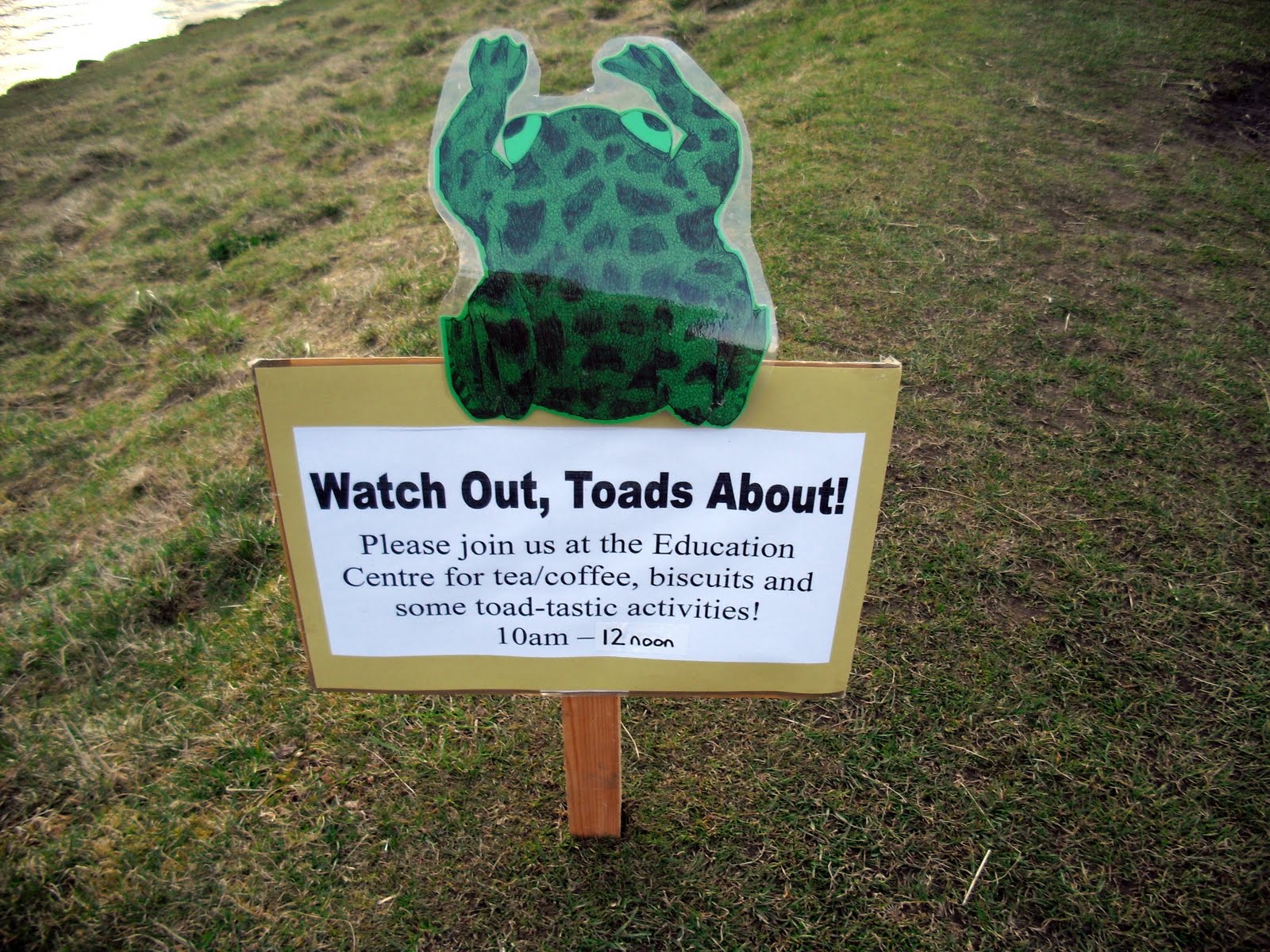
Kids who come out to help on the weekends get a free science lesson, some exercise, and even a snack. Some might even get to touch a toad! Though I didn't see any toads out yesterday, and I don't blame them--it was very windy and pretty cold.
In any case, the Toad Patrol served as a great reminder of what a unique natural resource Holyrood Park is. The toads are only one of the unusual species inhabiting the park: so cool to have a biology lab, a geology exhibit, and a natural playground all in one, right in the middle of the city!
27 March 2010
Craigmillar Castle, Pt. 2
Two weekends ago, Nana and I strolled over to nearby Craigmillar Castle to have a look around.

Craigmillar Castle was built in several stages. The first stage is also the innermost: a typical medieval tower house dating from the late 14th century, one of many examples of the type that still survive today.

In the 15th and 16th centuries, the tower house was expanded, more for comfort than for defense. The owners added two residential wings in the Renaissance style, a family chapel, and two sets of walls creating an inner and an outer courtyard. Today, the inner courtyard features two beautiful yew trees.

You can see from this shot how the residential areas of the castle are both lower and, architecturally, more ornate.

The castle is only three miles from Edinburgh Castle; Edinburgh Castle, Arthur's Seat, and Craigmillar Castle are all visible from one another, though Craigmillar kind of blends in with the surroundings, and of course Edinburgh isn't visible from Craigmillar if there's any kind of weather, which is pretty much all the time. (But not during our visit!)


Craigmillar's proximity to Edinburgh meant that Craigmillar had an important part to play in the Rough Wooing, a splendidly named sixteenth-century war between England and Scotland over who would marry the infant Mary, Queen of Scots. (The Rough Wooing was actually named centuries later by, you guessed it, Sir Walter Scott. Man, you just can't get away from that guy!)
In fact, Craigmillar would play an important role later in Mary's life, too. After the birth of her son, James VI of Scotland and I of England, Mary convalesced at Craigmillar, where she may or may not have hatched a plan to kill her husband, which involved both strangulation and an explosion!
Aside from its connection to Mary, Queen of Scots, Craigmillar Castle is also noteworthy for its remarkable standard of preservation. It's a fun place to explore, a tangle of unexpected passageways and curious rooms--and even curiouser visitors.


And, of course, Craigmillar has a prison, which means Nana was naturally thrown in jail.

Also--several latrines!

And, in the neighboring field, at least one Hieland Coo!

In short, Craigmillar gets our stamp of approval.


Craigmillar Castle was built in several stages. The first stage is also the innermost: a typical medieval tower house dating from the late 14th century, one of many examples of the type that still survive today.

In the 15th and 16th centuries, the tower house was expanded, more for comfort than for defense. The owners added two residential wings in the Renaissance style, a family chapel, and two sets of walls creating an inner and an outer courtyard. Today, the inner courtyard features two beautiful yew trees.

You can see from this shot how the residential areas of the castle are both lower and, architecturally, more ornate.

The castle is only three miles from Edinburgh Castle; Edinburgh Castle, Arthur's Seat, and Craigmillar Castle are all visible from one another, though Craigmillar kind of blends in with the surroundings, and of course Edinburgh isn't visible from Craigmillar if there's any kind of weather, which is pretty much all the time. (But not during our visit!)


Craigmillar's proximity to Edinburgh meant that Craigmillar had an important part to play in the Rough Wooing, a splendidly named sixteenth-century war between England and Scotland over who would marry the infant Mary, Queen of Scots. (The Rough Wooing was actually named centuries later by, you guessed it, Sir Walter Scott. Man, you just can't get away from that guy!)
In fact, Craigmillar would play an important role later in Mary's life, too. After the birth of her son, James VI of Scotland and I of England, Mary convalesced at Craigmillar, where she may or may not have hatched a plan to kill her husband, which involved both strangulation and an explosion!
Aside from its connection to Mary, Queen of Scots, Craigmillar Castle is also noteworthy for its remarkable standard of preservation. It's a fun place to explore, a tangle of unexpected passageways and curious rooms--and even curiouser visitors.


And, of course, Craigmillar has a prison, which means Nana was naturally thrown in jail.

Also--several latrines!

And, in the neighboring field, at least one Hieland Coo!

In short, Craigmillar gets our stamp of approval.

24 March 2010
Taking the mickey
"Taking the mickey," along with its less-polite variant "taking the piss," is a British expression meaning to tease or poke fun at. So let's take a moment to take the mickey out of some UK quirks.
1. Two-tap sinks
Back in ye olden tymes, sinks had hot taps and cold taps with separate pipes to each. It is no longer those times. If I can have wireless fiberoptic internet in my apartment, surely it is not too much to ask that I have one tap producing a usable-temperature water, instead of one that give me frostbite and one that gives me burns? My fingers are actually chapped and cracked from using these ridiculous (and omnipresent) sinks. There is even a Facebook group called "You are not an advanced country if you have separate water taps."And you know what? It's true.
2. Honey Cheerios
Not Honey Nut Cheerios, just Honey Cheerios. Why? I'm not sure, but I have a sneaking suspicion it has to do with allergy packaging regulations (this is, after all, a country of nut-free schools - at least in the literal sense.) Made extra amusing by the fact that the Honey Cheerios URL above on the Nestle site still ends with "cheerios-honeynut.aspx." Further cereal fun fact: Frosted Mini Wheats are just Frosted Wheats here.
3. The word "revision"
The first time I heard this was in French class, when the French-born teacher kept talking about how we were surely all revising for exams. Revising? Surely he meant "reviewing." But no. "Revision" is the commonly accepted UK term for reviewing. (See, for instance, "Sleeping helps students revise")
I could handle this as a one-for-one switch. What I can't process is that "revision" also incorporates the U.S. meaning of "to rewrite or edit." So in my research yesterday, I came across the sentence, "The committee revised the rules," and I have no idea what happened. Did they review the rules? Did they rewrite the rules? There is no way to tell!
4. Listed buildings
I'm all about conservation as far as architecture goes, but the "listing" program in the UK can be a bit goofy. Begun after World War II, it was intended to offer government protection to buildings of architectural and historical interest but has become a monster. You can't for instance, replace energy-inefficient old windows in a listed building with double-glazing without special permission. And that's assuming you even had a vote in getting your building listed in the first place.
As anybody who lived in Morse or Stiles can tell you, what constitutes good architecture is not a fixed concept. Unfortunately, listing is fixed. Once a building gets listed, you're pretty much stuck with it. Hence the outrage at Edinburgh a few years back when the university tried to list Appleton Tower. In the 1960s, a bunch of Georgian buildings (beautiful 200-year-old town houses) were torn down to construct this:

(The building in the front is William Robertson - Billy Bobberson to its friends - and is also hideous, but for the moment let's focus on the one in the back).
In the early 2000s, Appleton received architectural and historical interest, but not perhaps the kind Historic Scotland likes: students nominated it for demolition. A prominent geneticist alumnus of Edinburgh University consider "the ugliness of Appleton Tower" one of the seven wonders of the world. For some blindingly obscure reason, Historic Scotland decided that this was the right time to try to list Appleton Tower, thereby inflicting it upon us for all time. It didn't succeed, but what the heck! There's always next year!
5. UK Keyboards
The US and the UK are no longer merely two countries divided by a common language. We are now two countries divided by an uncommon computer keyboard.
Yes, UK keyboards have a few sneaky modifications to the U.S. layout. I can understand switching it so that the single quote ('), rather than the double quote (") is the default key just beside your right pinky, as the single quote is the correct UK usage for speech. It's just a formatting convention. What I can't figure out is why you'd bring the @ symbol down from the numbers row to replace the double-quote. I hardly ever use the @ symbol. Do British people send more e-mails than American ones? Or do they merely have less-effective autocomplete in their mail programs (programmes)? It. drives me nuts that my left shift key is shortened by a full key width, replaced with a useless forward slash, and I don't even know what the letter ¬ means. It looks like the Korean letter for the sound @k@.
Dang it, that was supposed to be "k." Curse you, UK keyboards!!!!!
1. Two-tap sinks
Back in ye olden tymes, sinks had hot taps and cold taps with separate pipes to each. It is no longer those times. If I can have wireless fiberoptic internet in my apartment, surely it is not too much to ask that I have one tap producing a usable-temperature water, instead of one that give me frostbite and one that gives me burns? My fingers are actually chapped and cracked from using these ridiculous (and omnipresent) sinks. There is even a Facebook group called "You are not an advanced country if you have separate water taps."And you know what? It's true.
2. Honey Cheerios
Not Honey Nut Cheerios, just Honey Cheerios. Why? I'm not sure, but I have a sneaking suspicion it has to do with allergy packaging regulations (this is, after all, a country of nut-free schools - at least in the literal sense.) Made extra amusing by the fact that the Honey Cheerios URL above on the Nestle site still ends with "cheerios-honeynut.aspx." Further cereal fun fact: Frosted Mini Wheats are just Frosted Wheats here.
3. The word "revision"
The first time I heard this was in French class, when the French-born teacher kept talking about how we were surely all revising for exams. Revising? Surely he meant "reviewing." But no. "Revision" is the commonly accepted UK term for reviewing. (See, for instance, "Sleeping helps students revise")
I could handle this as a one-for-one switch. What I can't process is that "revision" also incorporates the U.S. meaning of "to rewrite or edit." So in my research yesterday, I came across the sentence, "The committee revised the rules," and I have no idea what happened. Did they review the rules? Did they rewrite the rules? There is no way to tell!
4. Listed buildings
I'm all about conservation as far as architecture goes, but the "listing" program in the UK can be a bit goofy. Begun after World War II, it was intended to offer government protection to buildings of architectural and historical interest but has become a monster. You can't for instance, replace energy-inefficient old windows in a listed building with double-glazing without special permission. And that's assuming you even had a vote in getting your building listed in the first place.
As anybody who lived in Morse or Stiles can tell you, what constitutes good architecture is not a fixed concept. Unfortunately, listing is fixed. Once a building gets listed, you're pretty much stuck with it. Hence the outrage at Edinburgh a few years back when the university tried to list Appleton Tower. In the 1960s, a bunch of Georgian buildings (beautiful 200-year-old town houses) were torn down to construct this:

(The building in the front is William Robertson - Billy Bobberson to its friends - and is also hideous, but for the moment let's focus on the one in the back).
In the early 2000s, Appleton received architectural and historical interest, but not perhaps the kind Historic Scotland likes: students nominated it for demolition. A prominent geneticist alumnus of Edinburgh University consider "the ugliness of Appleton Tower" one of the seven wonders of the world. For some blindingly obscure reason, Historic Scotland decided that this was the right time to try to list Appleton Tower, thereby inflicting it upon us for all time. It didn't succeed, but what the heck! There's always next year!
5. UK Keyboards
The US and the UK are no longer merely two countries divided by a common language. We are now two countries divided by an uncommon computer keyboard.
Yes, UK keyboards have a few sneaky modifications to the U.S. layout. I can understand switching it so that the single quote ('), rather than the double quote (") is the default key just beside your right pinky, as the single quote is the correct UK usage for speech. It's just a formatting convention. What I can't figure out is why you'd bring the @ symbol down from the numbers row to replace the double-quote. I hardly ever use the @ symbol. Do British people send more e-mails than American ones? Or do they merely have less-effective autocomplete in their mail programs (programmes)? It. drives me nuts that my left shift key is shortened by a full key width, replaced with a useless forward slash, and I don't even know what the letter ¬ means. It looks like the Korean letter for the sound @k@.
Dang it, that was supposed to be "k." Curse you, UK keyboards!!!!!
Subscribe to:
Posts (Atom)