
The term papers are slain, and it's time for Nana and me to finally get out and make some use of our Historic Scotland memberships.
We have a week before Christmas and a week after New Year's, and while we've done some research into what's actually open this time of year, we still haven't been able to choose where to go! So I thought our loyal readers might have some suggestions.
Where would you like to see us go?
Glasgow: Scotland's largest city; Britain's third largest. Big and bustling (and modern) compared to quaint little Edinburgh, but with a history just as ancient. Notable for its industrial heritage, as the Clyde region was once shipbuilder to the world.
Stirling: An ancient stronghold city at the lowest crossing of the River Forth and one of Scotland's medieval capitals. The bridge over the Forth was the site of an important victory by William Wallace in 1297, and nearby Bannockburn was the site of the defeat of the English by Robert the Bruce in 1314. The castle figured in just about every major conflict in Scottish history in the last thousand years.
St. Andrews: Although not quite the birthplace of golf (the oldest course in the world is actually the Musselburgh Links, right outside Edinburgh), St. Andrews is most famous as the sport's spiritual capital. It was also a major religious center in the medieval era and is home to Scotland's oldest university.
Aviemore: Skiing in Scotland, you say? Turns out they already have snow, or at least some ice, in the Cairngorms (my favorite gorms). And even if the weather doesn't cooperate, the Highlands offer some great winter photo ops.
The Borders: The Scottish Borders are home to a cluster of major medieval abbeys, as well as the home of Sir Walter Scott, who is widely seen as Scotland's greatest novelist. (You probably know him as the author of Waverley and Ivanhoe.) This is also where border collies come from!
Craigmillar Castle: One of several castles in the Edinburgh area with a connection to Mary, Queen of Scots. This is where Mary recovered after the birth of James I, and also where she did (or did not, depending on who you ask) plot to kill her husband, Lord Darnley.
Linlithgow Palace: Situated about halfway between Stirling and Edinburgh, Linlithgow was the home of most of the Stuart kings.
Dunfermline: Both the birthplace of Andrew Carnegie--and the site of the first of the world's many Carnegie Libraries--and the final resting place of Scotland's medieval royalty.
Most of these are within day-trip range of Edinburgh; we could probably hit 2-4. Any thoughts? E-mail me or post your votes in the comments. We'll make our first trip on Monday!
11 December 2009


10 December 2009
Update: Seminar Paper Purgatory
Just so you know, we haven't fallen off the face of the earth--we're just finishing up our term papers. Expect a post about the St. Andrew's Day Ceilidh shortly!
04 December 2009
North Berwick: Tantallon Castle

Two weeks ago, Nana and I headed to North Berwick with the ISC. After a morning hike along the beach to Dirleton Castle (previous post), we caught a bus out to Tantallon Castle, at the mouth of the Firth of Forth, just opposite Bass Rock.
Tantallon Castle was home to a branch of the Douglas family called the "Red Douglases." Built in the 14th century, it is a pretty typical coastal castle, consisting of a large curtain wall (seen from the lip of the outer ditch to the south, below) across the inland side of a coastal promontory.

You can also see the castle's dovecote in the photo above, and Bass Rock in the background. (A dovecote is a pigeon coop. Pigeons were considered good eatin' back in the day.)
To get an idea of the layout of the castle, here's a rough plan, courtesy of Wikipedia (click to enlarge):

Tantallon is also typical of coastal castles in that it is situated to protect a natural harbor or haven--see also Lindisfarne Castle (previous post). The view below shows the small haven Tantallon was built to protect.

The castle isn't just remarkable for its location: Tantallon, like Dirleton, is also very well preserved. Most of the curtain wall and gatehouse are structurally sound, and views from the top of the wall like those below are well worth the six-story climb . . . though you'll notice that, by this point in the afternoon, the rain was starting to interfere with the photos!

This next shot of the gatehouse, taken from the top looking down, clearly shows where wooden floors would have separated the tower into six stories; note how the fireplaces are aligned to make use of the same chimney.

By the way--did you notice that Tantallon, like just about every other building on the eastern side of Scotland, is made of Old Red Sandstone?
A couple other oddities from our visit to Tantallon:
First, for reasons known only to him/herself and God, a biplane stunt pilot chose this rainy, blustery day to practice stalls over the castle. I couldn't get a shot of the plane against the clouds, but I could get a shot of Nana staring up into the sky, wondering what the heck that pilot was thinking.

Second, Bass Rock (shown below) deserves a bit of explanation--even though we weren't able to visit, as the island isn't open to tourists during the off-season.

Bass Rock, like Arthur's Seat and the Castle Rock in Edinburgh, as well as nearby North Berwick Law, is a remnant of an old volcano. Also, like Fidra, which I mentioned in our Dirleton post, Bass Rock has a Robert Louis Stevenson connection: it was here David Balfour was brought after being kidnapped for the second time.
Bass Rock is most famous today as a bird sanctuary, and bird watchers from all over Europe come to take a gander at its gannets (har har), as well as puffins, Eider ducks, cormorants, and various gulls.
30 November 2009
Happy St. Andrew's Day! And, Flags!
Today is St. Andrew's Day, the national holiday of Scotland. St. Andrew's Day is celebrated on the Catholic feast day of St. Andrew, the patron saint of Scotland (and Greece, Romania, Russia, and Constantinople).
St. Andrew's Day in its current form is relatively new, dating back to 2007, when the Scottish Parliament declared St. Andrew's Day a non-mandatory bank holiday. The three-day weekend has quickly bloomed into the commercial kickoff of the Christmas season.
Of course Edinburgh wasn't about to let an opportunity for another festival pass. So now, all the Christmas hoopla launches with fireworks the Thursday before St. Andrew's Day weekend and keeps rolling right through Hogmanay, the Scottish New Year's festival. The festivities include a carnival with rides, a German Christmas market, a Highland Christmas market, and various concerts, mostly centered on Prince's Street Gardens.
St. Andrew's Day weekend has an added bonus: all Historical Scotland attractions are open to the public free of charge.
However, St. Andrew's Day is not without its controversy: the resolution that established St. Andrew's Day as a bank holiday also required that all public buildings fly the Saltire, aka the Cross of St. Andrew, aka the Scottish national flag. Buildings with more than one flagpole are required to fly the Union Jack as well.
 Hey--did you notice? The Union Jack is a combination of St. Andrew's Cross (Scotland), St. George's Cross (England), and St. Patrick's Cross (Ireland). Here's a diagram from Wikipedia.
 Clockwise from top-left: St. Andrew's Cross (Scotland), St. George's Cross (England), St. Patrick's Cross (Ireland), Flag of the United Kingdom of Great Britain and (Northern) Ireland (after 1801), English-version Flag of Great Britain (1707-1801), unofficial Scottish version of the Flag of Great Britatin (1707-1801).
(On a side note--what about Wales?)
Anyway, the St. Andrew's Day flag controversy comes from the fact that all government and military buildings in Scotland are required by law to fly the Union Jack at all times, and only fly the Saltire if they have a second flagpole. This includes Edinburgh Castle (which is both a royal residence and a regimental headquarters), seen as a quintessential symbol of Scottishness, but cursed with only one flagpole.
The tin-foil hat says that's by design, so that the Union Jack flies from the highest point in Edinburgh throughout the year--and also from Holyrood Palace, overlooking the Scottish Parliament. Some have tried to take matters into their own hands by raising the Saltire at the Castle--none have succeeded. Instead, the Scots have had to content themselves with celebrating St. Andrew's Day as they celebrate their other national holiday: with haggis, neeps, tatties, and ceilidh dancing.
We're going to a ceilidh tonight, in fact. Stay tuned for pictures!
St. Andrew's Day in its current form is relatively new, dating back to 2007, when the Scottish Parliament declared St. Andrew's Day a non-mandatory bank holiday. The three-day weekend has quickly bloomed into the commercial kickoff of the Christmas season.
Of course Edinburgh wasn't about to let an opportunity for another festival pass. So now, all the Christmas hoopla launches with fireworks the Thursday before St. Andrew's Day weekend and keeps rolling right through Hogmanay, the Scottish New Year's festival. The festivities include a carnival with rides, a German Christmas market, a Highland Christmas market, and various concerts, mostly centered on Prince's Street Gardens.
St. Andrew's Day weekend has an added bonus: all Historical Scotland attractions are open to the public free of charge.
However, St. Andrew's Day is not without its controversy: the resolution that established St. Andrew's Day as a bank holiday also required that all public buildings fly the Saltire, aka the Cross of St. Andrew, aka the Scottish national flag.
 Buildings with more than one flagpole are required to fly the Union Jack as well.
 Hey--did you notice? The Union Jack is a combination of St. Andrew's Cross (Scotland), St. George's Cross (England), and St. Patrick's Cross (Ireland). Here's a diagram from Wikipedia.
 Clockwise from top-left: St. Andrew's Cross (Scotland), St. George's Cross (England), St. Patrick's Cross (Ireland), Flag of the United Kingdom of Great Britain and (Northern) Ireland (after 1801), English-version Flag of Great Britain (1707-1801), unofficial Scottish version of the Flag of Great Britatin (1707-1801).
(On a side note--what about Wales?)
Anyway, the St. Andrew's Day flag controversy comes from the fact that all government and military buildings in Scotland are required by law to fly the Union Jack at all times, and only fly the Saltire if they have a second flagpole. This includes Edinburgh Castle (which is both a royal residence and a regimental headquarters), seen as a quintessential symbol of Scottishness, but cursed with only one flagpole.
The tin-foil hat says that's by design, so that the Union Jack flies from the highest point in Edinburgh throughout the year--and also from Holyrood Palace, overlooking the Scottish Parliament. Some have tried to take matters into their own hands by raising the Saltire at the Castle--none have succeeded. Instead, the Scots have had to content themselves with celebrating St. Andrew's Day as they celebrate their other national holiday: with haggis, neeps, tatties, and ceilidh dancing.
We're going to a ceilidh tonight, in fact. Stay tuned for pictures!
26 November 2009
North Berwick: Dirleton Castle
Last Saturday, Nana and I took a day trip to North Berwick, a small seaside town at the eastern edge of the Firth of Forth. North Berwick is most famous for its seabirds, which like to congregate on nearby crags such as Bass Rock, and for two nearby castles, Dirleton and Tantallon.
After arriving in North Berwick and getting the scoop from the tourist information center (British tourist information centers--or "centres"--seem to be uniformly fantastic), we spent the morning walking along the beach to Dirleton.


The walk was very pretty, but turned out to be a bit more than we bargained for in more ways than one.

First, the weather turned wet on us--though not as wet as it would turn later in the day! Then, we were nearly thwarted by a swollen stream running over the beach into the water.


Seriously, this little stream fanned out into a delta about the size of a football field, and it took us a good 10 minutes to hop our way across all the little streams . . .
. . . before reaching the other side and seeing that there was a bridge up in the dunes, about thirty yards upstream. Oh, well!
After a little more than an hour, we reached Fidra, a small island made famous by Robert Louis Stevenson, about whom I happen to be writing a paper this term.

Fidra is famous on two counts: first, the imaginary map which Stevenson drew as his starting point for Treasure Island was based on the outline of Fidra; second, in Stevenson's novel Catriona, this spot is where the fugitive Jacobite Alan Breck escapes from Scotland and where, minutes later, David Balfour is kidnapped (again). Stevenson had good reason to be familiar with the island: he frequently visited the nearby beach at Yellowcraigs, which is where we had to ford that raging river, and his father Thomas designed and built the lighthouse there.
(Yes, the Stevenson family business was lighthouse engineering, and many of the islands that feature in Stevenson's fiction have some connection to his father's or his grandfather's lighthouses.)
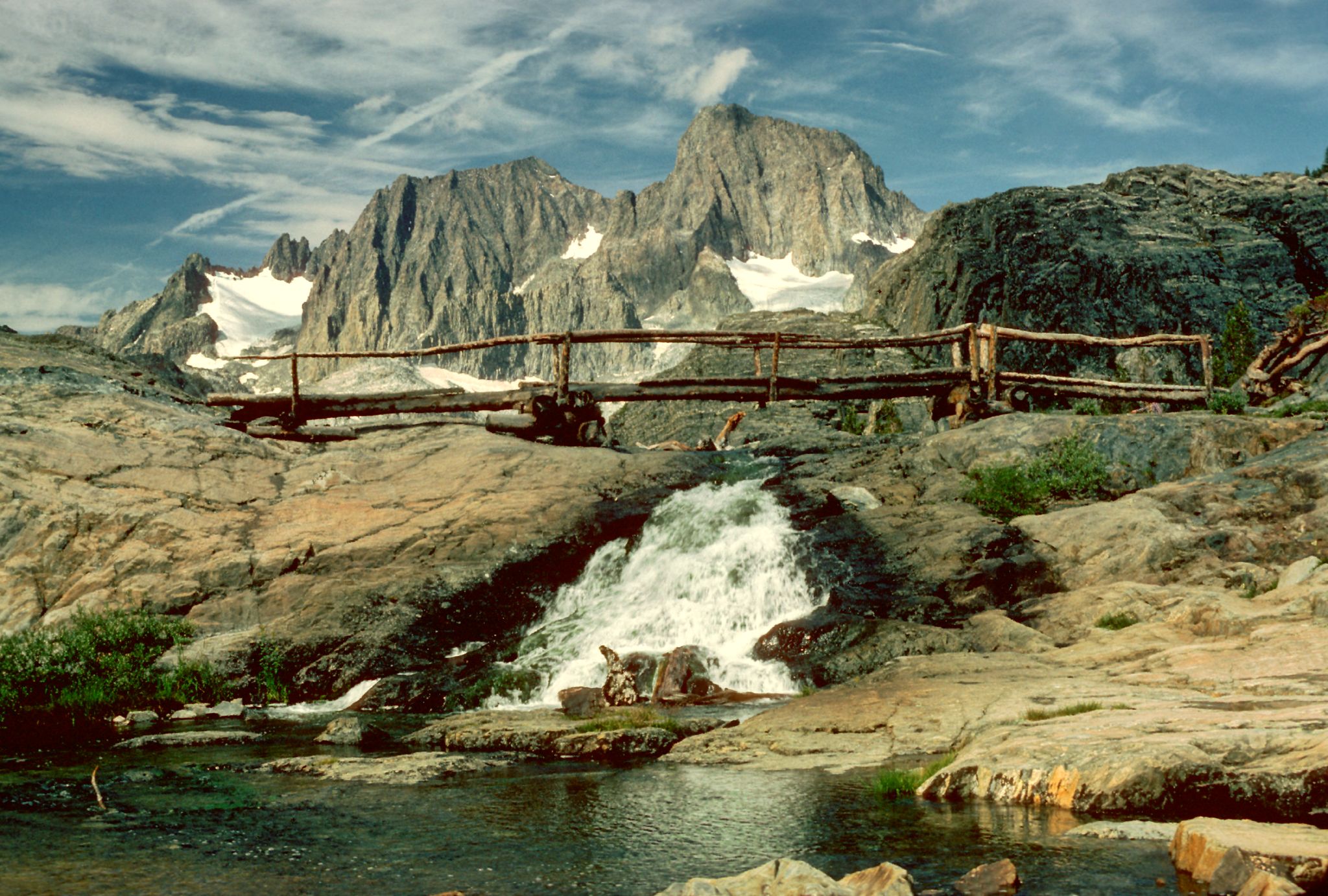
Anyway, the beach trail to Dirleton turns inland at Fidra, where it meets up with the John Muir Way--yes, that John Muir, the Scottish-American naturalist and early environmentalist. (Muir was born in nearby Dunbar.) The John Muir Way is not to be confused with the slightly-more-spectacular John Muir Trail in the US.
The John Muir Way also passes some highly creepy trees.

Dirleton itself is little more than a few dozen houses clustered around the castle, which sits on a crag in the center of a manicured park.

Dirleton Castle is the main draw, and it's definitely worth the visit. Three different architectural eras are represented in its various renovations and additions--which date from the 13th, 14th, and 15th centuries--and enough of the castle is still structurally sound that you get a much better sense of the place when it was in use, and there are a lot of different rooms and passages to explore.
Pictured below, for example, is the upper-class prison. Lower-class prisoners were (no joke) simply thrown down a hole in the floor at left.

This next shot shows the distinctly Anglo-Norman shape of the castle's facade--those enormous round turrets are the giveaway.

Here I am on top the same turrets shown above.

On a side note: the 14th-century occupants were the Haliburtons, presumably a branch of those Halliburtons. That's the thing--you start digging too deep into anything in the US or Canada, and you're bound to find a bunch of Scots.
Next up: Tantallon Castle and Bass Rock!
After arriving in North Berwick and getting the scoop from the tourist information center (British tourist information centers--or "centres"--seem to be uniformly fantastic), we spent the morning walking along the beach to Dirleton.


The walk was very pretty, but turned out to be a bit more than we bargained for in more ways than one.

First, the weather turned wet on us--though not as wet as it would turn later in the day! Then, we were nearly thwarted by a swollen stream running over the beach into the water.


Seriously, this little stream fanned out into a delta about the size of a football field, and it took us a good 10 minutes to hop our way across all the little streams . . .
. . . before reaching the other side and seeing that there was a bridge up in the dunes, about thirty yards upstream. Oh, well!
After a little more than an hour, we reached Fidra, a small island made famous by Robert Louis Stevenson, about whom I happen to be writing a paper this term.

Fidra is famous on two counts: first, the imaginary map which Stevenson drew as his starting point for Treasure Island was based on the outline of Fidra; second, in Stevenson's novel Catriona, this spot is where the fugitive Jacobite Alan Breck escapes from Scotland and where, minutes later, David Balfour is kidnapped (again). Stevenson had good reason to be familiar with the island: he frequently visited the nearby beach at Yellowcraigs, which is where we had to ford that raging river, and his father Thomas designed and built the lighthouse there.
(Yes, the Stevenson family business was lighthouse engineering, and many of the islands that feature in Stevenson's fiction have some connection to his father's or his grandfather's lighthouses.)
Anyway, the beach trail to Dirleton turns inland at Fidra, where it meets up with the John Muir Way--yes, that John Muir, the Scottish-American naturalist and early environmentalist. (Muir was born in nearby Dunbar.) The John Muir Way is not to be confused with the slightly-more-spectacular John Muir Trail in the US.
(Note: NOT Scotland.)
The John Muir Way also passes some highly creepy trees.

Dirleton itself is little more than a few dozen houses clustered around the castle, which sits on a crag in the center of a manicured park.

Dirleton Castle is the main draw, and it's definitely worth the visit. Three different architectural eras are represented in its various renovations and additions--which date from the 13th, 14th, and 15th centuries--and enough of the castle is still structurally sound that you get a much better sense of the place when it was in use, and there are a lot of different rooms and passages to explore.
Pictured below, for example, is the upper-class prison. Lower-class prisoners were (no joke) simply thrown down a hole in the floor at left.

This next shot shows the distinctly Anglo-Norman shape of the castle's facade--those enormous round turrets are the giveaway.

Here I am on top the same turrets shown above.

On a side note: the 14th-century occupants were the Haliburtons, presumably a branch of those Halliburtons. That's the thing--you start digging too deep into anything in the US or Canada, and you're bound to find a bunch of Scots.
Next up: Tantallon Castle and Bass Rock!
Subscribe to:
Posts (Atom)
